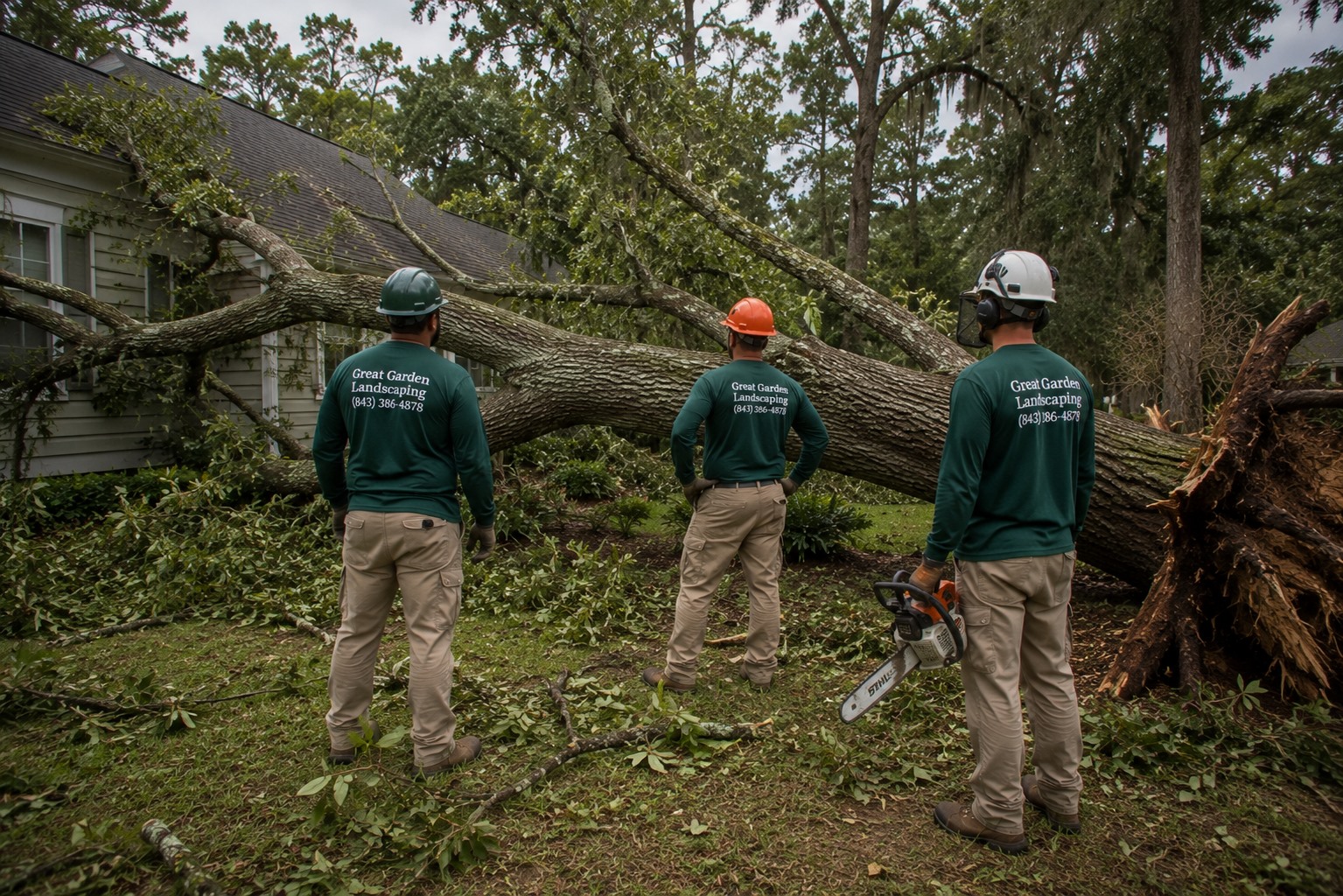
Residents of Johns Island, SC know the reality of storm season all too well. From powerful summer thunderstorms that snap large branches off live oaks, to the sustained wind events of tropical storms and occasional hurricane brushes that uproot entire trees, storm-related tree damage is a recurring fact of life in the Charleston Lowcountry. Knowing what to do — and what not to do — in the immediate aftermath of a fallen tree event can protect your safety, limit damage to your property, and streamline the insurance and removal process.
Step One: Safety Before Anything Else
When a tree falls on or near your property, the first and only priority is ensuring everyone's physical safety. Do not approach the fallen tree until you have assessed for immediate hazards. The most critical hazard is downed power lines: if a fallen tree has brought down electrical lines, assume those lines are energized and lethal. Keep everyone — including pets — well clear of the area, and call your utility company (Dominion Energy South Carolina for most Johns Island residents) immediately. Do not attempt to move power lines yourself or touch the tree if it may be in contact with live electrical infrastructure.
Secondary hazards to assess from a safe distance include: structural damage to your home (where the tree may be resting against damaged structure), hazardous lean of other trees in the immediate area that may be destabilized by the event, and unstable root balls of uprooted trees, which can suddenly shift and cause injury.
Document Everything Before Any Removal Begins
Once safety is confirmed and the scene is stable, documentation is critically important for insurance purposes. Before any part of the fallen tree is moved or removed, photograph and video the entire damage scene thoroughly. Capture the tree's full position, any structural damage to buildings, fencing, or vehicles, the root ball if the tree uprooted, and any collateral damage to surrounding landscape.
SC homeowner's insurance claims for storm tree damage typically require documentation of the pre-removal condition of the damage. If you remove the tree before documenting, you may compromise your insurance claim. Contact your insurance agent or company as soon as possible after documenting — many insurers have 24-hour emergency lines for storm damage events, and your representative can advise on coverage specifics and whether a claims adjuster needs to view the scene before removal.
Assessing What the Fallen Tree Is Resting On
Not all fallen tree situations are equally urgent, though all should be addressed promptly. Understanding what the tree has fallen on and how it's resting helps determine the urgency of professional intervention:
Tree on structure (house, garage, outbuilding): Highest urgency. A tree resting on a structure creates ongoing stress that can worsen structural damage, especially under additional rainfall or wind. Emergency removal within 24–48 hours is strongly recommended.
Tree on vehicle: High urgency. Do not attempt to move the vehicle until the tree has been removed by professionals — pulling a vehicle out from under a fallen tree can cause additional structural damage to the vehicle and is dangerous.
Tree on fence or outbuilding: Moderate urgency. Address within a few days to prevent additional damage and secure the property.
Tree in open yard: Lower urgency but address within 1–2 weeks. Trees lying on turf will kill grass beneath them, and larger trunk sections begin decomposing processes that are far more difficult to manage than prompt removal.
Why DIY Tree Removal After Storms Is Dangerous
Fallen storm trees are particularly hazardous to remove without professional training and equipment. Storm-damaged trees often have unpredictable tension loading — branches and trunk sections may be under stored bending force from the way the tree is resting, and cutting in the wrong place can cause a section to spring violently in an unexpected direction. This "spring-back" effect has caused serious injuries and fatalities to homeowners attempting DIY chainsaw work on fallen trees.
Trees resting against structures add another layer of complexity — as sections are removed, the distribution of weight shifts, and the remaining tree may move in ways that damage the structure or injure workers. Professional tree removal crews are trained in rigging and section removal techniques that control these forces safely.
The only safe chainsaw work most homeowners should attempt on storm debris is cutting small isolated branches (under 4 inches diameter) from already-cleared sections that are lying flat on the ground with no tension and no overhead hazard. Anything involving a standing tree, a large trunk, or a tree resting on a structure should be left to licensed professionals.
Understanding the Root Cause: Why Trees Fall in SC Storms
Understanding why trees fall in South Carolina storms can help with future risk mitigation. The most common causes we see in the Johns Island and Charleston area are:
Shallow root systems: Many trees common to coastal SC — slash pines, water oaks, some live oaks — have relatively shallow root systems that don't anchor deeply, making them vulnerable to high winds especially when soils are saturated from heavy rainfall.
Root decay: Hidden internal root decay is a leading cause of tree failure in storms. Trees that appear healthy above ground may have significantly compromised anchoring due to root rot that develops silently over years.
Structural defects: Co-dominant stems (two main trunks), included bark in major crotches, and large dead branches significantly increase failure risk under storm loading.
Regular professional tree assessment — distinct from routine landscape maintenance — can identify high-risk trees before they become emergency situations.
Post-Storm Landscape Recovery
After emergency tree removal, the landscape recovery process begins. Root ball craters from uprooted trees need to be filled and graded. Damage to surrounding plants, turf, and garden beds should be assessed. In some cases, the opportunity of a tree failure is a prompt to redesign that area of the landscape with more appropriate, lower-risk plant material. Great Garden Landscaping offers comprehensive landscape recovery services after tree removal events, from site grading through new planting installation.
Conclusion: Be Prepared, Act Safely
Living in the Johns Island and Charleston, SC area means being prepared for storm events and their aftermath. Knowing the right steps — safety first, document before removal, call licensed professionals — puts you in the best position to handle fallen tree events without additional injury, property damage, or insurance complications.
Emergency Tree Removal in Johns Island, SC
Storm tree down? Great Garden Landscaping provides emergency tree removal throughout the Lowcountry. Licensed & insured. Call now.
Frequently Asked Questions
Ensure everyone is safe and evacuate the area. Do not approach if power lines are down — call your utility company first. Document all damage thoroughly with photos and video before anything is moved. Then contact a licensed tree removal professional. Do not attempt to remove a large fallen tree yourself.
Coverage varies by policy. Generally, if a tree falls on a structure during a storm, structural damage is typically covered. Tree removal itself may or may not be covered depending on your policy terms. Contact your insurance agent immediately and document all damage before any removal begins to protect your claim.
Trees resting on structures should be removed within 24–48 hours. Trees in open yard areas should be addressed within 1–2 weeks. Delay causes turf damage, decomposition problems, and in the case of trees on structures, can worsen structural damage. Emergency same-day removal is available from Great Garden Landscaping for urgent situations.
Great Garden Landscaping serves Johns Island, Charleston, Summerville, and surrounding SC communities. For emergency tree removal, contact us or call (843) 386-4878.