Most irrigation systems in Johns Island, SC and the greater Charleston Lowcountry operate out of sight — underground pipes, buried valves, and retractable sprinkler heads that pop up briefly during watering cycles and retreat back into the lawn. Because the system is largely hidden, problems can develop over months before they become obvious — and by the time visible damage appears, you may already have wasted hundreds of gallons of water, killed expensive landscape plants from drought, or accumulated significant underground damage. Recognizing the warning signs early is the key to catching irrigation problems while they're still minor repairs rather than major excavation projects.
Warning Sign #1: Unexplained Wet or Soggy Spots
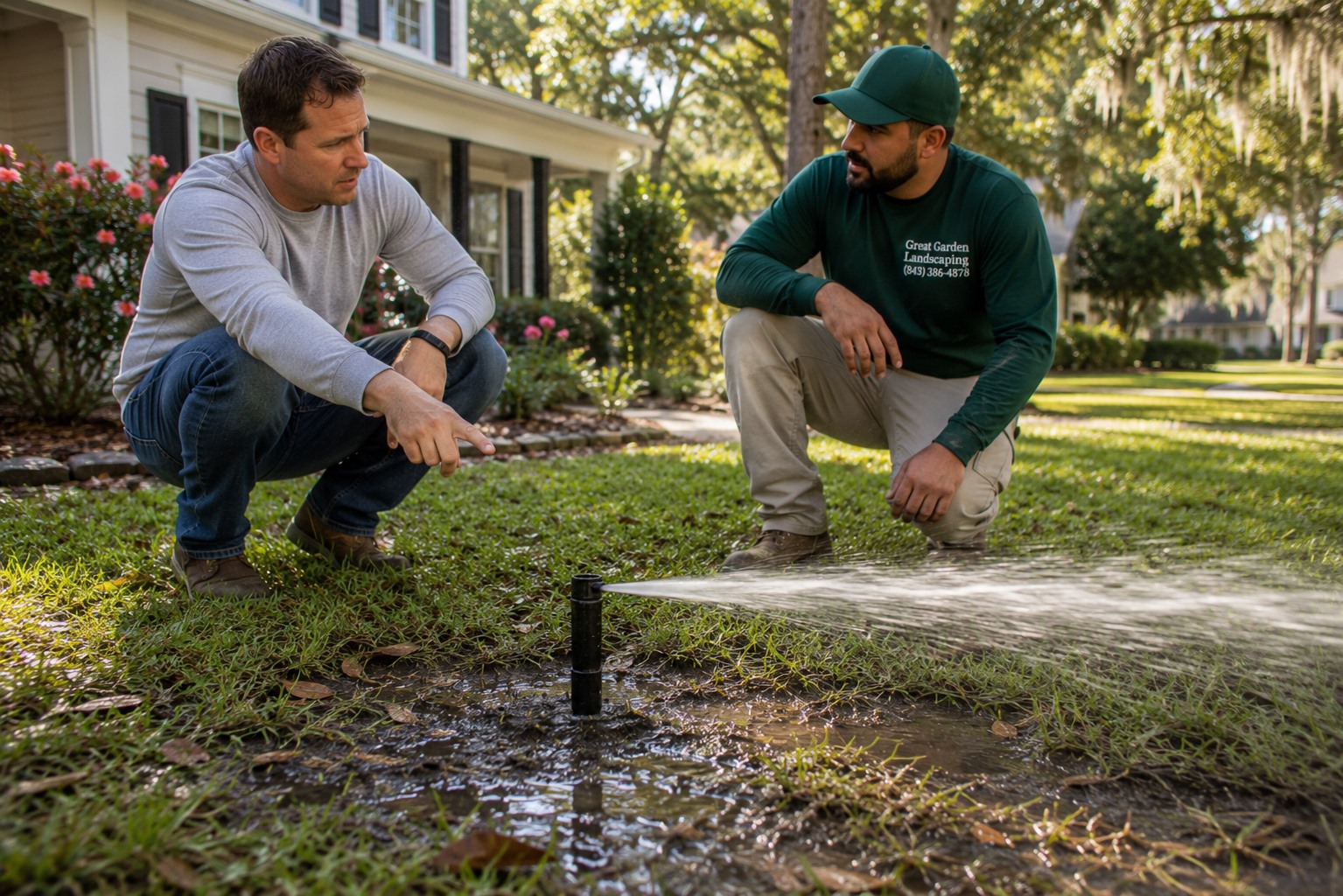
One of the most reliable warning signs of an underground irrigation leak is a persistently wet or soggy area in your turf or garden bed that doesn't match the surrounding soil moisture. If part of your lawn stays spongy and wet even days after the last rainfall or irrigation cycle, a broken pipe, cracked fitting, or failed valve below the surface is almost certainly the cause.
In the Johns Island area, with its relatively high water table in some locations, it can sometimes be difficult to distinguish natural drainage issues from irrigation leaks. The key differentiator is location and timing: if the wet spot corresponds roughly to an irrigation line path and seems most pronounced after an irrigation cycle, it's almost certainly a system problem rather than natural seepage.
Don't delay on soggy spots — a continuous underground leak saturates soil, promotes root rot, and can destabilize hardscape and foundations over time. It also represents significant water waste, especially on city water connections where every gallon costs money.
Warning Sign #2: Unexplained Dry Patches in Covered Areas
The opposite problem is equally important to catch: dry patches in areas of your turf or beds that should be receiving irrigation coverage but clearly are not. Turf that turns brown or yellow in a pattern that follows zone coverage boundaries, or garden beds with wilting plants despite regular irrigation cycles, indicates a coverage gap in your system.
Dry patches from irrigation failure are particularly damaging in South Carolina's summer because the combination of heat and drought stress can kill turf and plants within days without adequate water. By the time the damage is visually obvious — significant browning or dead plants — the underlying irrigation problem may have been developing for weeks.
Possible causes of dry patches include: clogged or misdirected sprinkler heads no longer delivering coverage to their intended zone, a failed zone valve that prevents one or more zones from activating at all, a broken lateral pipe that reduces pressure and coverage throughout a zone, or tree root intrusion that has disrupted or crushed an irrigation line.
Warning Sign #3: Sprinkler Heads Not Retracting
Pop-up sprinkler heads are designed to extend during operation and retract flush with the soil when not running. Heads that remain extended after an irrigation cycle has ended, or heads that stick in the up position, indicate mechanical problems with the head's retraction spring or debris clogging the head. Extended heads in turf areas are a serious issue — they'll be hit by mowing equipment, causing damage to both the head and the mower, and the resulting trauma to the head usually causes leak or spray pattern problems.
Heads can also fail to extend fully at all, reducing their throw radius and creating coverage gaps. During your irrigation cycle, walk the zones and watch for heads that pop up partially or that appear to be spraying at reduced pressure — these indicate either a debris/clog issue or a head that needs replacement.
Warning Sign #4: Water Pooling Near Valves or Controller
Water accumulating around irrigation valve boxes, near the backflow preventer, or near the controller is a clear indication of a fitting, valve, or connection problem that needs professional attention. Valve box interiors should be dry between uses — standing water in valve boxes indicates a leaking valve, fitting, or wiring conduit that's allowing water ingress.
Backflow preventer issues are particularly important to address promptly in SC, where local water utility regulations require functional backflow prevention on irrigation systems. A leaking or improperly functioning backflow preventer can result in code violations and potential contamination of the drinking water supply, in addition to the mechanical repair needed.
Warning Sign #5: Unexplained Increase in Water Bills
If your water bill increases significantly without a clear explanation — no extended watering, no pool filling, no major change in outdoor water use — an underground irrigation leak is one of the first things to investigate. A pinhole leak in a 1-inch lateral irrigation line can release hundreds of gallons per week. A cracked valve body or a continuously running zone (due to a failed valve solenoid) can release thousands of gallons per billing cycle with zero surface evidence.
Compare your current water bills to the same period in previous years to identify anomalous increases. If your usage is up 20–40% without explanation, a professional irrigation inspection can quickly identify whether an irrigation leak is the culprit.
Warning Sign #6: Water Misting or Geysering from Heads
Pop-up heads that spray a fine mist rather than proper droplets, or that produce an abnormal geyser-like stream, are operating at improper pressure. Misting heads indicate excessively high pressure that atomizes water into fine droplets — this dramatically increases wind drift and evaporation, reducing the actual water delivered to turf. Geyser-like streams from a damaged or stripped head are wasting water and likely not providing proper coverage pattern either.
Both conditions are typically addressed by head replacement, but the underlying cause (pressure regulator failure, for example) should also be investigated to prevent recurrence.
Warning Sign #7: System Running at Wrong Times or Failing to Run
If your irrigation controller is malfunctioning — running at unintended times, skipping programmed cycles, or completely failing to activate zones — the controller itself may need repair or replacement. Modern irrigation controllers are increasingly sophisticated, and some component failures can cause erratic behavior that wastes water or fails to water when needed.
Before assuming controller failure, however, check the basics: is the controller plugged in and powered? Have there been power outages that may have reset programming? Are zone cables properly connected? Many apparent controller failures are actually connection or programming issues that are easily resolved.
When to Call for Professional Irrigation Repair
While some basic issues — like cleaning a clogged head nozzle or resetting a controller program — can be handled by homeowners with basic mechanical aptitude, most irrigation problems benefit from professional diagnosis. A professional technician can pressure-test zones to identify underground leaks, use locating equipment to trace pipe paths, assess valve function electronically, and identify root intrusion or settling damage to buried components that isn't detectable from the surface.
Great Garden Landscaping provides professional irrigation system repair and inspection throughout Johns Island, SC and the Lowcountry. If you're seeing any of the warning signs described above, or if your system hasn't been professionally inspected in the past year, an inspection is a smart investment before peak summer watering demand arrives.
Conclusion: Early Detection Saves Water and Plants
The most expensive irrigation repairs are almost always problems that were allowed to develop for a full season before being addressed. Knowing the warning signs and acting on them promptly keeps repairs small, water bills reasonable, and your landscape plants properly irrigated through South Carolina's demanding summers.
Irrigation System Repair in Johns Island, SC
Spotted a warning sign? Great Garden Landscaping inspects and repairs irrigation systems throughout the Lowcountry. Free estimates — licensed & insured.
Frequently Asked Questions
The most common warning signs include unexplained wet or soggy spots (broken underground pipe), dry patches in covered areas (failed head or valve), heads that don't retract after watering, water pooling near valves, unusually high water bills, and misting or geyser-like spray from damaged heads. Any of these warrant professional inspection.
Annual professional inspection is recommended, ideally in early spring before peak summer watering season. This allows any winter damage, pest damage, or accumulated wear to be identified and repaired before the system is under full demand. A spring inspection also confirms zone coverage and controller programming is correct for the new season.
Yes. Underground irrigation leaks are a common cause of unexplained water bill spikes in SC. A broken lateral line can release hundreds to thousands of gallons per week without visible surface evidence. Compare your bill to the same period in prior years — if usage is up significantly without explanation, a professional irrigation inspection is the first step.
Basic tasks like cleaning a clogged head nozzle or resetting a controller program can be DIY. But most meaningful irrigation problems — underground leaks, valve failures, zone coverage issues, controller malfunctions — benefit from professional diagnosis and repair. A professional can pressure-test zones, locate underground leaks, and assess valve function electronically in ways a homeowner cannot.
Great Garden Landscaping serves Johns Island, Charleston, Summerville, and surrounding SC communities. For professional irrigation system repair, contact us or call (843) 386-4878.