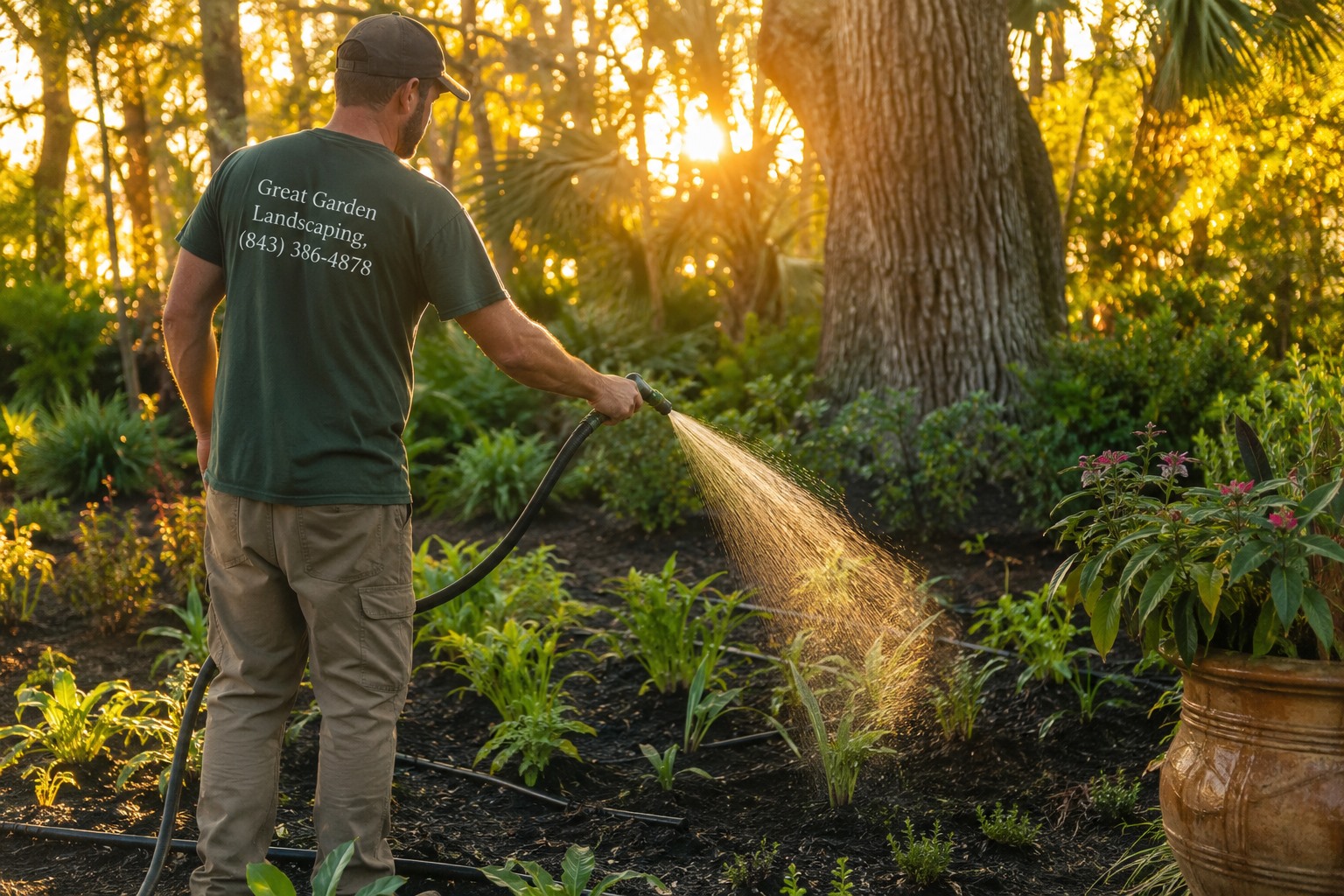
A well-established plantation-style landscape with graceful palms, sweeping live oaks, flowering shrubs, and vibrant ground covers is a defining feature of Johns Island and the greater Charleston, SC area. But that kind of beauty requires thoughtful, consistent plant care — and watering is at the center of it. Too little, and plants wilt or fail to establish. Too much, and root systems suffer, foliage diseases spread, and you waste a valuable resource.
Great Garden Landscaping has installed and maintained plantation-style landscapes across Johns Island, James Island, Summerville, and the broader SC Lowcountry. Here's what we've learned about building a watering schedule that keeps these landscapes healthy through every season.
Understanding Your Soil Type Before Scheduling
Before you can build an effective watering schedule, you need to understand what type of soil your landscape sits on — because soil type determines how quickly water drains and how long moisture stays available to plant roots.
In the Johns Island and coastal SC area, soils range from sandy loam (common near the coast and on barrier islands) to heavier sandy clay (more common inland toward Summerville and the piedmont). Sandy soils drain quickly and need more frequent watering, while clay-influenced soils hold moisture longer but can become waterlogged and restrict oxygen to roots if overwatered. A simple soil squeeze test — if a ball of moist soil crumbles when you open your hand, it's sandy; if it holds its shape, there's more clay — gives you a quick read on your drainage characteristics.
Many Johns Island properties also benefit from raised beds or amended soil to improve drainage around plantation shrubs and trees, especially where standing water is a risk after heavy rain.
Watering Schedule for Newly Planted Specimens
The most critical period for any planted tree or shrub is the first full growing season after installation. During this time, roots are establishing in their new soil environment and have not yet spread far enough to access deep soil moisture reserves.
For newly planted trees and large shrubs in South Carolina's climate, we recommend this general schedule:
Weeks 1–4: Water every 2–3 days. If temperatures are above 90°F and there's no significant rainfall, consider daily watering for the first two weeks. Water slowly and deeply — you want moisture to penetrate 12–18 inches down to encourage deep root growth.
Months 2–4: Taper to twice weekly, monitoring plant appearance. Yellowing leaves, dropped leaves, or wilting in the morning (before the heat of day) are signs of insufficient water. Midday wilting in extreme heat can be normal even with adequate watering.
Months 5–12: Move to weekly supplemental watering, with adjustment during rainy periods and more frequent watering during drought. Most SC trees and shrubs are considered "established" after 12 months in the ground, at which point they require much less supplemental irrigation.
Seasonal Watering Adjustments for South Carolina
South Carolina has four distinct seasons that each require different watering approaches:
Spring (March–May): Increase watering frequency as temperatures rise and plants enter active growth. This is also peak establishment season for newly installed specimens — an ideal planting time in SC because warm temperatures promote root growth without summer's peak heat stress.
Summer (June–August): Maximum watering demand. Even established plants may need supplemental water during extended dry spells. Water deeply and infrequently rather than lightly and often — deep watering encourages deeper root systems that are more drought-tolerant.
Fall (September–November): Taper watering as temperatures cool. Fall is an excellent planting season in SC, as cooler temperatures reduce transplant stress while still allowing root establishment before winter.
Winter (December–February): Most established SC landscape plants are dormant or semi-dormant in winter and need little to no supplemental irrigation. Winter rains typically provide adequate moisture. Continue watering newly planted specimens if we experience dry winter periods.
The Best Time of Day to Water
When you water matters almost as much as how much you water. In South Carolina's humid climate, poorly timed watering can promote fungal diseases that damage or kill landscape plants.
Always water in the early morning, between 5 AM and 10 AM. This timing offers several advantages: foliage dries during the day, reducing the leaf wetness that promotes fungal disease. Evaporation losses are lower in the cooler morning air. And plants are hydrated and ready for the day's heat.
Avoid evening watering. Wet foliage and wet soil surfaces sitting through a warm, humid SC night create ideal conditions for powdery mildew, black spot, and other common fungal diseases. If you use an irrigation system and schedule night runs for convenience, it's worth resetting to morning hours — your plants will be healthier for it.
Using Irrigation Systems Effectively for Plantation Landscapes
For plantation-style landscapes with multiple plant types, a zoned irrigation system allows you to customize watering schedules for different plant groups. Trees, for example, need infrequent deep watering, while groundcovers and annual color may need more frequent surface moisture. A well-designed irrigation system with separate zones for trees, shrubs, groundcovers, and turf is the most efficient way to water a diverse plantation landscape.
If your irrigation system is more than five years old or if you notice uneven coverage, dry patches, or unusually high water bills, it may need professional inspection and repair. Great Garden Landscaping offers irrigation system repair throughout the Johns Island and Charleston area. An annual check-up ensures all heads are functioning correctly, coverage is even, and you're not wasting water to breaks or misdirected heads.
Recognizing Signs Your Watering Schedule Needs Adjustment
Plants tell you when something's off. Knowing how to read those signals helps you adjust your schedule before damage becomes permanent.
Signs of underwatering: Wilting in the morning before peak heat, dry and brittle leaf edges, leaf curl, premature leaf drop in summer, and soil that's dry 2–3 inches below the surface.
Signs of overwatering: Yellow lower leaves (especially with green newer growth), persistent mushrooms or moss at the soil surface, stems that feel soft or mushy near the base, and soil that stays wet for extended periods between watering sessions.
When in doubt, do the finger test: push your finger 2–3 inches into the soil near the plant's root zone. If it's still moist, wait. If it's dry, water.
Conclusion: Consistency Is the Key
A plantation-style landscape in Johns Island, SC can be extraordinarily rewarding — one of the most beautiful types of residential landscape found anywhere in the country. Maintaining it well starts with getting your watering schedule dialed in from the moment of installation. Thoughtful, consistent watering through the critical establishment period, adjusted seasonally as conditions change, is the foundation of a thriving landscape.
Professional Plantation Service in Johns Island, SC
From planting to ongoing maintenance, Great Garden Landscaping brings your plantation landscape vision to life. Licensed & insured. Free estimates.
Frequently Asked Questions
Newly planted trees and shrubs in South Carolina need watering every 2–3 days for the first 4–6 weeks, then tapering to weekly as roots establish. During summer heat above 90°F, daily watering may be needed initially. Once established (typically 6–12 months), most plants only need supplemental watering during dry spells.
Early morning is ideal — between 5 AM and 10 AM. Morning watering allows foliage to dry during the day, reducing fungal disease risk. It also minimizes evaporation loss. Avoid evening watering, which leaves foliage wet overnight and promotes fungal diseases common in SC's humid climate.
Signs of overwatering include yellowing lower leaves, wilting despite wet soil, mushrooms or moss at the soil surface, and soft/mushy stems near the base. In SC's clay soils, overwatering is common because drainage is slow. Always check soil moisture 2–3 inches deep before watering — if still moist, hold off.
Great Garden Landscaping serves Johns Island, Charleston, Summerville, and surrounding SC communities. For professional plantation service, contact us or call (843) 386-4878.