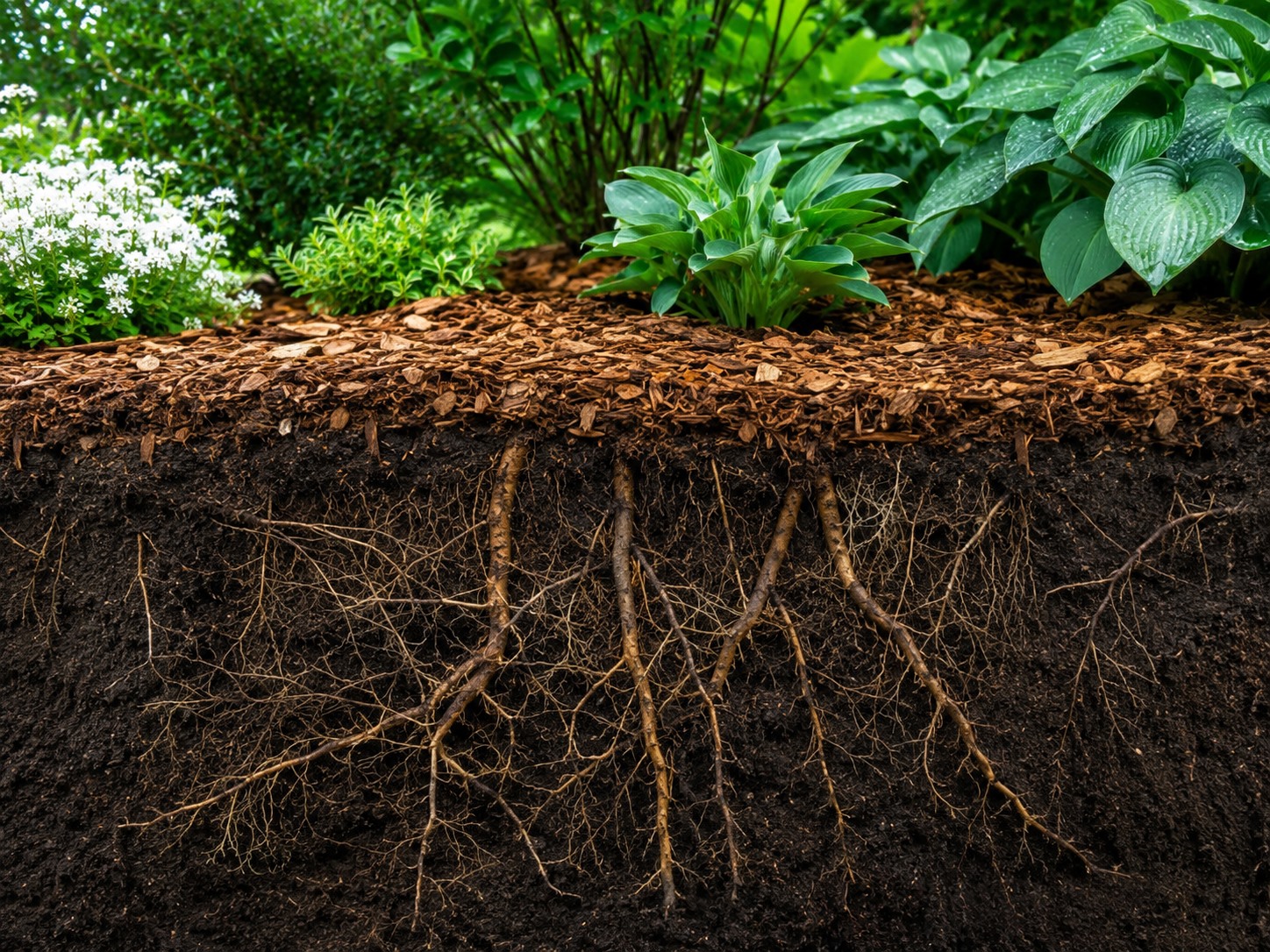
If you're a homeowner in Johns Island, James Island, or anywhere in the Charleston, SC area, you know how brutally hot and dry summer can get — and how quickly that heat can stress your plants and drain your irrigation system. One of the most effective and affordable solutions to summer moisture loss is professional mulch installation. Yet many homeowners don't fully understand just how powerfully mulch works to retain soil moisture and protect the plant root systems that depend on it.
In this article, we'll break down the science behind mulch and moisture, which mulch types work best for South Carolina's climate, and what you can expect in terms of real savings on water and plant maintenance.
The Science: How Mulch Slows Soil Water Evaporation
Bare soil exposed to South Carolina's summer sun can lose a significant portion of its surface moisture within hours on a hot, dry day. When the sun hits dark bare soil, solar radiation heats the surface rapidly, and that heat energy accelerates evaporation from the soil's upper layers. The moisture that your plants need is simply lost into the air before roots ever access it.
A 2–3 inch layer of organic mulch works on two levels to prevent this. First, it physically shades the soil surface from direct sunlight, dramatically reducing the temperature of the soil beneath it. Studies consistently show that mulched soil can be 10–20°F cooler than adjacent bare soil on a summer day. Second, the mulch itself acts as a physical barrier that slows vapor transmission — the evaporation of soil moisture through the surface.
Combined, these effects can reduce soil moisture loss by 25–50% compared to bare soil, meaning your irrigation or rainfall goes much further for every plant in your landscape.
Moisture Benefits Are Critical in South Carolina's Climate
The Charleston Lowcountry and surrounding areas experience a climate that puts significant stress on landscape plants. Summers bring intense heat, periods of drought interspersed with heavy rain, and sandy or loamy coastal soils that drain quickly. For Johns Island homeowners especially, soil moisture management is a constant challenge.
Sandy soils, common throughout coastal SC, have a relatively low water-holding capacity compared to heavier clay soils. Water drains through sandy soil quickly — even after a substantial rainstorm, the upper soil layer can dry out within 24 to 48 hours in peak summer heat. Mulch is one of the most effective tools for compensating for this natural drainage by slowing evaporation from the surface so that soil stays moist longer after rain or irrigation.
During SC's periodic summer droughts — which can last two to three weeks or longer — the difference between mulched and unmulched beds can literally determine plant survival.
How Mulch Supports Deep Root Development
There's a secondary moisture benefit that many homeowners don't think about: how mulch influences root behavior. When the top inch of soil dries out rapidly in bare beds, plant roots tend to follow moisture and concentrate in the moist deeper soil layers — but frequent boom-and-bust moisture cycles stress those roots continuously.
Mulched beds maintain more consistent surface-to-mid-depth soil moisture, which encourages roots to develop in the upper soil layers where organic matter is richest. Deeper, more extensive root systems mean plants are better positioned to handle short dry periods on their own. Over time, regularly mulched landscape plants tend to become hardier and more drought-tolerant than their unmulched counterparts — a real long-term benefit in a climate like South Carolina's.
Choosing the Right Mulch for Maximum Moisture Retention
Not all mulch materials perform equally when it comes to moisture retention. Here's how the most common options compare for the Johns Island, SC area:
Shredded hardwood mulch is a top performer for moisture retention. Its fine texture allows it to pack together into a dense layer that effectively blocks evaporation while still allowing rainwater to penetrate. It breaks down slowly in SC's humidity, enriching soil as it decomposes.
Pine bark chips (medium or large) are excellent for drainage-sensitive areas and moisture retention, with a natural resistance to compacting that keeps them permeable to rain while still providing good evaporation control.
Pine straw (longleaf or slash pine) is a South Carolina classic. It's naturally water-shedding on the surface but holds moisture beneath, and its light weight makes it ideal for slopes where heavier mulch might wash. It's a particularly good choice around acid-loving plants like azaleas and gardenias.
Dyed wood chips perform similarly to natural hardwood but do not enrich the soil as they decompose. They're primarily an aesthetic choice.
For pure moisture retention, shredded hardwood and pine bark consistently come out ahead in performance testing for South Carolina conditions.
Calculating Real Water Savings from Mulch Installation
For Johns Island, SC homeowners with irrigation systems, proper mulch installation translates directly to reduced water bills. A property with 1,000 square feet of landscape beds might save 20–40% of the water previously needed to keep beds healthy through the summer — a meaningful reduction over a full season.
Beyond direct water savings, properly mulched plants experience less heat stress and drought stress, meaning fewer emergency waterings, less plant replacement cost, and lower overall landscape maintenance expense year over year. The upfront investment in professional mulch installation typically pays back in water savings within a single season.
Mulch and Irrigation Working Together
The best landscape water strategy combines efficient irrigation with proper mulch coverage. Drip irrigation or soaker hoses deliver water directly to the root zone, and mulch then holds that moisture in the root zone where plants can access it. Together, the combination is far more efficient than overhead sprinklers on bare soil, where a large portion of every irrigation cycle simply evaporates before plants ever benefit.
If your Johns Island, SC property has an irrigation system, Great Garden Landscaping can assess both your mulch installation needs and your irrigation setup to ensure your whole landscape water strategy is as efficient as possible. We offer irrigation system repair and inspection alongside our mulch installation services.
Conclusion: Mulch Is Your Best Investment in South Carolina's Heat
For Johns Island and Charleston area homeowners, professional mulch installation isn't just cosmetic — it's a practical, evidence-based solution to one of the most challenging aspects of maintaining a beautiful landscape in South Carolina's climate. By reducing evaporation, cooling root zones, and supporting deeper root growth, mulch delivers visible results in plant health and real savings on water costs season after season.
Professional Mulch Installation in Johns Island, SC
Let Great Garden Landscaping install mulch correctly for maximum moisture retention. Free estimates — licensed & insured.
Frequently Asked Questions
A 2–3 inch mulch layer can reduce soil water evaporation by 25–50% compared to bare soil. In South Carolina's hot summers, properly mulched beds may need watering 30–50% less frequently, reducing water bills and plant stress significantly.
For moisture retention in South Carolina, shredded hardwood and pine bark mulch are excellent choices. They form a dense layer that slows evaporation while still allowing water to penetrate. Pine straw is also effective and breaks down to improve soil structure over time.
Yes. During SC's periodic summer droughts, mulch is one of the most effective defenses for landscape plants. It significantly slows soil drying, protecting roots during periods between watering or rainfall. Combined with proper irrigation, mulch can help most plants survive dry spells without stress damage.
Sandy soils, common along the SC coast and in the Lowcountry, drain quickly and dry out rapidly in heat. Mulch compensates by dramatically slowing surface evaporation, giving soil moisture time to move into the root zone before it's lost. Over time, decomposing mulch also adds organic matter that improves the water-holding capacity of sandy soils.
Great Garden Landscaping serves Johns Island, Charleston, Summerville, and surrounding SC communities. For professional mulch installation or any other landscaping service, contact us or call (843) 386-4878.