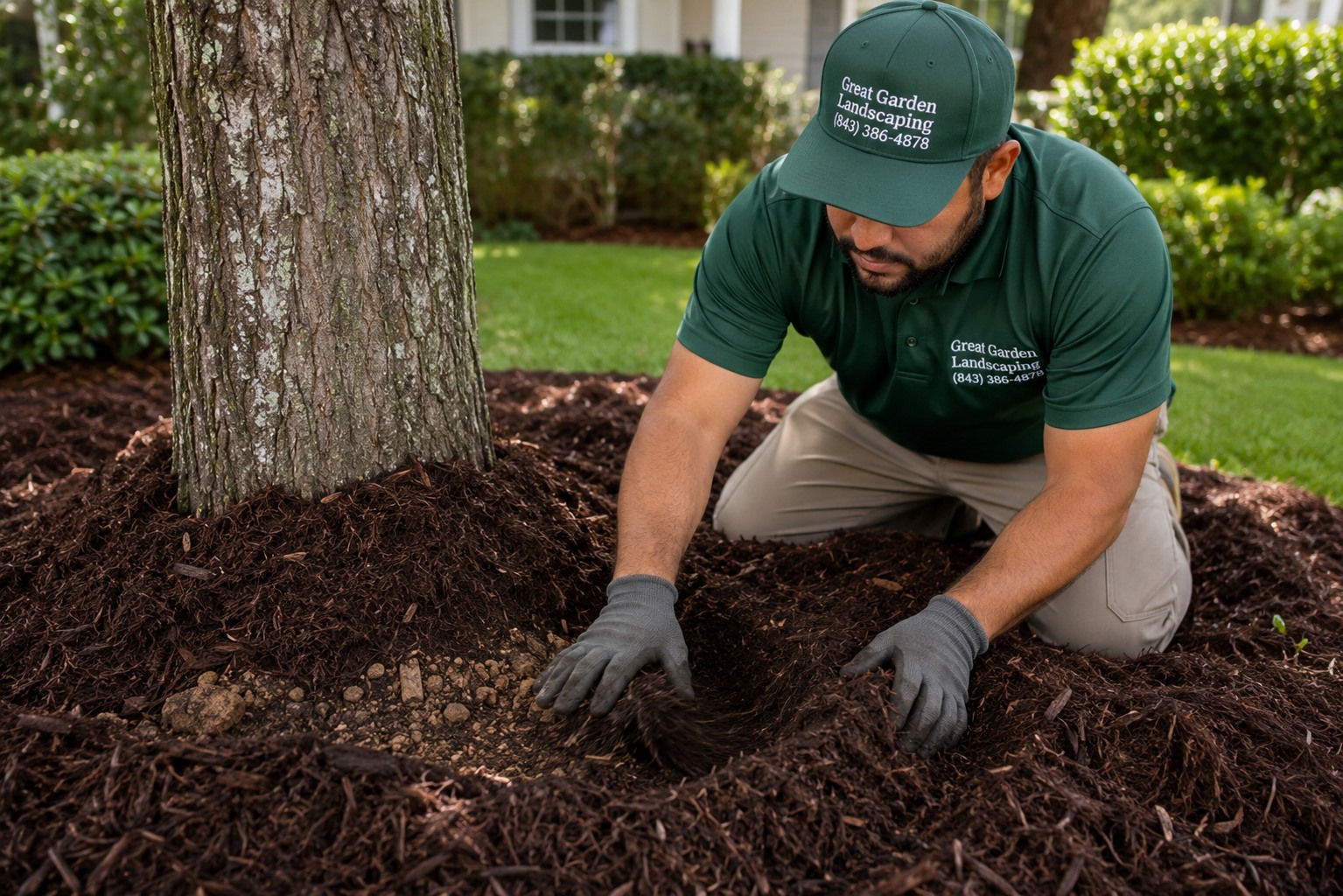
Mulch is one of the most beneficial things you can apply to your garden beds in Johns Island, SC and throughout the Charleston Lowcountry. When installed correctly, it retains soil moisture, suppresses weeds, regulates temperature, and adds attractive visual contrast to your landscape. But when installed incorrectly, mulch can actually harm or kill the very plants it's meant to protect.
At Great Garden Landscaping, we've seen these mistakes on properties across Johns Island, North Charleston, James Island, and the surrounding area. This guide covers the most common mulch installation errors and how to avoid them — whether you're doing it yourself or evaluating a service provider's work.
Mistake #1: Volcano Mulching Around Trees
The single most damaging and widespread mulch installation mistake is "volcano mulching" — piling mulch up against tree trunks in a cone or volcano shape. You'll see this everywhere, but it's genuinely harmful to your trees.
When mulch is piled against bark, it traps moisture between the mulch and the wood, creating anaerobic conditions that promote fungal rot and disease. It also creates habitat for rodents and insects that damage the cambium layer just beneath the bark. Over time, volcano mulching can kill even large, established trees.
The correct approach is to pull mulch back 2–3 inches from the trunk base, maintaining a clear "donut" ring around the tree. Mulch should never touch tree bark. This small detail makes an enormous difference in tree health and longevity.
Mistake #2: Applying Mulch Too Deep
More is not always better when it comes to mulch depth. The ideal depth is 2–3 inches for most applications. Many homeowners and even some landscapers apply mulch at 4, 5, or even 6 inches depth — believing that deeper coverage means better weed control and moisture retention.
In reality, excessive mulch depth creates several problems. It can prevent rainfall and irrigation water from reaching the soil at all, causing plants to paradoxically experience drought stress despite regular watering. It can also suffocate soil oxygen exchange, harming the aerobic organisms that keep soil healthy. In South Carolina's humid climate, deep mulch layers can also stay continuously damp, creating conditions favorable to soil-borne diseases and root rot.
Stick to 2–3 inches for most garden beds. In areas with heavy pine straw, 3 inches is appropriate since pine straw compresses more than wood chip mulches.
Mistake #3: Skipping Weed Removal Before Mulching
Mulch does suppress weed germination from seeds, but it does absolutely nothing to kill established weeds already growing in your beds. Many homeowners make the mistake of layering mulch directly over existing weeds, hoping the mulch will smother them.
Established weeds — especially perennial weeds with deep root systems common in Johns Island, SC — will push right through any mulch layer and continue growing. Worse, the mulch provides an ideal moist environment for them to thrive. Before any mulch installation, beds should be thoroughly cleared of existing weeds by hand removal, hoeing, or appropriate targeted herbicide application.
Taking the extra time (or hiring professionals) to properly clear beds before mulching is the difference between beds that stay clean for months and beds that are weedy again within weeks.
Mistake #4: Using the Wrong Mulch for the Application
Not all mulch is appropriate for all applications. Using dyed rubber mulch in vegetable gardens, or using fine-textured mulch on slopes where it washes away in SC's heavy rains, are common examples of material mismatches.
In the Johns Island and Charleston area, we typically recommend pine bark chips or shredded hardwood for most landscape beds — they're long-lasting, drain well in our sandy coastal soils, and break down slowly. Pine straw is excellent for slopes and around acid-loving plants like azaleas and camellias. Fine-texture mulches can compact quickly in humid conditions, potentially reducing drainage.
Consider your specific plants, drainage conditions, slope, and aesthetic goals when selecting mulch material. If you're unsure, a professional consultation can save you from a costly mistake.
Mistake #5: Failing to Account for Mature Plant Size
When mulching around shrubs and perennials, many homeowners mulch right up to the plant's current size without considering that shrubs continue to grow. As plants mature, the cleared stem area needs to grow with them.
Revisit and adjust mulch clearance around shrubs annually as they expand. A small azalea that only needs a 3-inch clearance today may need 6–8 inches of clearance at the stem as it matures to a 4-foot shrub. Regular mulch maintenance accounts for this natural progression.
Mistake #6: Not Refreshing Mulch Regularly
Organic mulch breaks down over time — this is actually one of its benefits, since it enriches the soil as it decomposes. But it also means that coverage depth decreases over the season. Many homeowners apply mulch once and then don't refresh it for years, eventually leaving bare soil exposed in the beds.
In South Carolina's climate, most organic mulch should be refreshed annually — ideally in spring before peak summer heat. Pine straw may need refreshing every six months. A quick assessment of current depth each spring will tell you how much topping is needed to restore coverage to the proper 2–3 inch range.
Conclusion: Get Mulch Installation Right the First Time
Avoiding these common mistakes ensures your mulch delivers maximum benefit — protecting your plants, conserving moisture, and enhancing your property's appearance all year long. When in doubt, professional mulch installation from a trusted local team like Great Garden Landscaping in Johns Island, SC guarantees the job is done correctly from the start.
Need Professional Mulch Installation in Johns Island, SC?
Great Garden Landscaping installs mulch correctly every time — no volcano mulching, proper depth, and clean professional results. Licensed & insured. Free estimates.
Frequently Asked Questions
Volcano mulching is when mulch is piled up against a tree trunk in a cone or volcano shape. It traps moisture against the bark, creating conditions for rot, fungal disease, and pest damage. This practice can seriously harm or kill trees over time. Always maintain a 2–3 inch clearance ring around any tree trunk.
The ideal mulch depth is 2–3 inches for most South Carolina garden beds. Less than 2 inches provides inadequate weed suppression and moisture retention. More than 4 inches can suffocate roots and prevent rainwater from reaching the soil — both counterproductive outcomes.
No. Mulch suppresses new weed germination from seeds, but does not kill established weeds. Existing weeds will push through any mulch layer. Always remove existing weeds thoroughly before applying fresh mulch — either by hand, hoeing, or targeted treatment — for beds that stay clean long-term.
In SC's warm, humid climate, most organic mulch should be refreshed annually, typically in spring. Pine straw breaks down faster and may need refreshing every 6 months. A simple depth check each spring tells you how much top-dressing is needed to restore the proper 2–3 inch coverage.
Great Garden Landscaping serves Johns Island, Charleston, Summerville, and surrounding SC communities. For professional mulch installation or any other landscaping service, contact us or call (843) 386-4878. Licensed & insured. Free estimates.