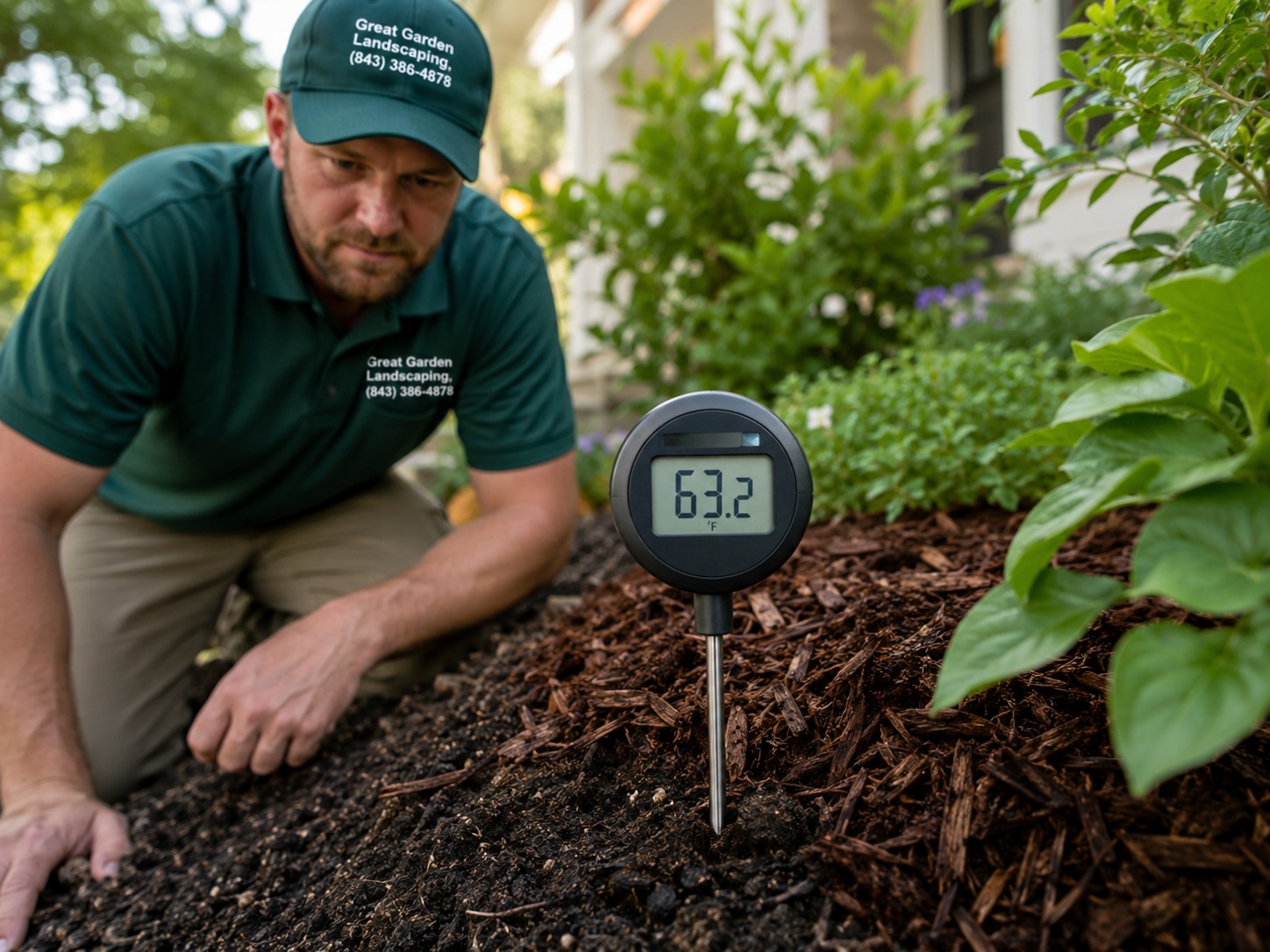
When most Johns Island homeowners think about mulch, they think about weed control and curb appeal. But one of mulch's most powerful benefits is less visible and less discussed: its remarkable ability to regulate soil temperature. In South Carolina's climate — where summer soil temperatures can climb to levels that damage plant root systems, and where winter cold snaps can freeze soils that tropical and subtropical plants call home — professional mulching service provides an insulating buffer that directly determines plant survival and growth quality.
Why Soil Temperature Matters More Than Air Temperature
Plants experience the world primarily through their roots, not their foliage. While we monitor air temperature as humans, what actually determines whether a plant grows vigorously, struggles, or dies is the temperature at the root zone — the soil immediately surrounding the plant's root system. Air temperature and soil temperature are related but not the same, and mulch has a far greater effect on soil temperature than on air temperature.
Plant roots have optimal temperature ranges for active growth. For most landscape ornamentals common to the Johns Island and Charleston area, that range is roughly 65–85°F for maximum root activity. At soil temperatures above 90–95°F, root growth slows dramatically and some physiological processes that enable water and nutrient uptake begin to fail. At soil temperatures below 50°F, root activity slows for warm-season plants. At soil temperatures below 28–32°F, damage to root tissues of cold-sensitive plants begins.
Understanding this, the value of anything that buffers extreme soil temperatures becomes clear.
Summer: How Mulch Shields Roots from SC Heat
In Johns Island, SC, July and August regularly bring air temperatures at or above 95°F. On exposed bare soil, solar radiation can drive surface soil temperatures even higher — measurements of bare dark garden soil in full sun on a hot SC summer day frequently show temperatures of 120–130°F at the surface and 100–115°F at 2 inches depth. At these temperatures, roots near the surface are in genuine heat stress.
A 2–3 inch layer of organic mulch acts as thermal insulation. The mulch itself absorbs solar radiation and releases it slowly, rather than transmitting it rapidly into the soil. Additionally, mulch retains moisture, and the evaporation of that moisture from within the mulch layer has a significant cooling effect (evaporative cooling). The combined result: soil under properly mulched beds typically stays 10–20°F cooler on hot SC summer days than adjacent bare soil. For plant root health, that difference is substantial and directly translates to better growth, less stress, and lower mortality risk during summer heat events.
Winter: Mulch as Root Zone Frost Protection
South Carolina's winters are mild compared to northern states, but they include periodic cold snaps — often brief but sharp — that can freeze soil to 2–4 inches depth during a hard freeze event. For plants that are hardy to SC's zone 9a air temperatures but sensitive to frozen root zones — gardenias, sago palms, some gingers, liriope, mondo grass — root zone freezing during these events can cause significant damage.
A proper mulch layer significantly buffers soil temperatures during freezes. The same insulating properties that keep soil cool in summer keep soil from losing heat as rapidly during cold nights. A 3–4 inch mulch layer (slightly deeper than the standard 2–3 inches for freeze protection) can keep root zone temperatures 5–10°F warmer than adjacent bare soil during a freeze, potentially keeping root systems of marginally hardy plants above the critical damage threshold.
For Johns Island homeowners with valuable subtropical plantings, refreshing and slightly deepening mulch in November is a simple, inexpensive freeze protection measure that can prevent plant losses during the occasional hard freeze.
The Thermal Buffering Effect: Modulating Temperature Swings
Beyond absolute temperature values, the regularity or variability of temperature matters greatly to plants. Roots don't just respond to how hot or cold it gets — they respond to the rate of temperature change as well. Rapid soil temperature swings stress plants because root cell physiology isn't designed to adjust instantly to large temperature changes.
Bare soil, with its relatively low thermal mass, follows air temperature changes fairly rapidly. A warm winter afternoon followed by a hard freeze can shift bare soil temperatures by 20–30°F within hours. A mulched soil changes temperature much more gradually, with mulch acting as a thermal mass that absorbs and releases temperature change slowly. This buffering of swings — keeping peak temperatures lower and trough temperatures higher — creates a more stable, less physiologically stressful root environment year-round.
Choosing Mulch Type for Optimal Temperature Regulation
Not all mulch materials provide equal temperature regulation. The best mulch for thermal buffering is one that has sufficient density and depth to provide insulation without creating conditions that compromise plant health.
Shredded hardwood mulch at 2–3 inches is an excellent general-purpose choice for temperature regulation. Its density and composition provide meaningful thermal insulation while maintaining good moisture penetration and air exchange with the soil below.
Pine bark (medium or large chip) is similarly effective and particularly good at maintaining loose structure that prevents compaction — important for long-term air and water movement to roots.
Pine straw provides some temperature buffering but is less thermally dense than wood-based mulches. It excels in other ways (slope stability, acid soil adjustment) but for pure temperature regulation, wood mulches perform better.
Very deep mulch layers (over 4 inches) are counterproductive — while they may provide marginally more insulation, the trade-off of reduced oxygen exchange and potential moisture suffocation of roots outweighs the temperature benefit.
Timing Your Mulching Service for Maximum Benefit
To capture both summer cooling and winter protection benefits, the optimal mulching service schedule for most Johns Island, SC properties is spring application (April–May) and fall refresh (October–November):
Spring application should happen before soil temperatures climb into the heat stress range — usually before June in the Lowcountry. Fresh mulch applied in April or May is in place and effective before summer's most intense heat arrives.
Fall refresh tops up mulch that has decomposed through the growing season, restoring coverage before winter cold snaps arrive. This also takes advantage of mulch's ability to extend the root growth season into fall by keeping soil warmer longer, which supports plant establishment for fall-planted specimens.
Conclusion: Professional Mulching Service Pays Year-Round
For Johns Island and greater Lowcountry homeowners, professional mulching service delivers benefits in every season. Summer soil cooling, winter root protection, and year-round temperature stability all contribute to healthier, more resilient landscape plants. When properly applied by experienced professionals at the right depth, coverage, and timing, mulching service is one of the highest-return investments in your landscape's long-term health.
Professional Mulching Service in Johns Island, SC
Great Garden Landscaping applies mulch correctly for maximum temperature regulation and plant health. Free estimates — licensed & insured.
Frequently Asked Questions
A 2–3 inch mulch layer can keep soil 10–20°F cooler than adjacent bare soil on hot SC summer days. This buffering is significant for root health — mulched roots stay in a viable temperature range while bare soil roots can hit temperatures that impair growth. In winter, the same mulch keeps root zone temperatures from dropping as severely during freezes.
For temperature regulation in South Carolina, shredded hardwood and pine bark mulches provide the best thermal insulation at 2–3 inches depth. Their density creates an effective buffer against both summer heat and winter cold. Pine straw provides some temperature buffering but is less effective than wood-based mulches for pure thermal performance.
Yes. A mulch layer around plant root zones buffers soil temperature during SC's occasional freezes, potentially keeping root zones 5–10°F warmer than bare soil. This is especially important for subtropical plants like gardenias, sago palms, and tropical gingers that are popular in the Lowcountry but sensitive to hard freezes. A slightly deeper fall mulch application (3–4 inches) provides the most protection.
For optimal temperature regulation, schedule professional mulching service twice yearly: spring (April–May) to get cooling mulch in place before summer heat arrives, and fall (October–November) to refresh mulch coverage before winter cold snaps. Spring application is most critical for summer performance; fall refresh maximizes winter root protection.
Great Garden Landscaping serves Johns Island, Charleston, Summerville, and surrounding SC communities. For professional mulching service, contact us or call (843) 386-4878.