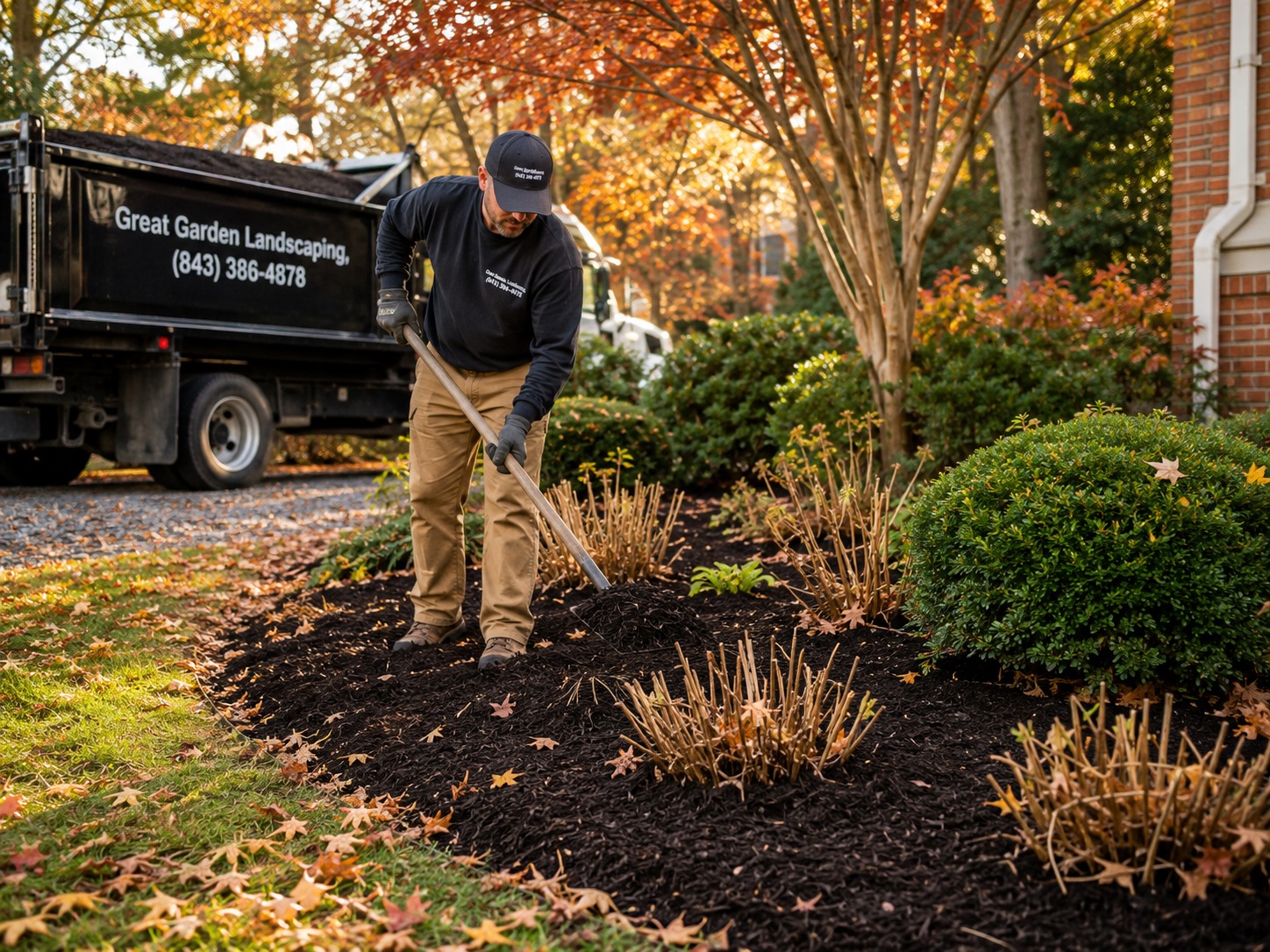
Successful landscaping in Johns Island, SC requires working with the seasons rather than against them. South Carolina's warm climate means gardening and planting opportunities exist in every month — but the right plants at the right time, combined with proper mulching service at each seasonal transition, is what separates landscapes that thrive from those that struggle. This guide walks through a full calendar year of mulching and planting strategy for the Lowcountry.
Spring (March–May): Prime Mulching and Planting Season
Spring is the most important season for Johns Island landscaping, and mulching service in April–May is the highest-priority annual application for most properties. As temperatures rise from winter lows into the 60s–70s°F, soil is warming and plants are breaking dormancy and entering active growth. This is the moment to get mulch in place before summer's heat makes soil management critical.
Spring mulching goals: Refresh winter-depleted mulch to a 2–3 inch layer in all garden beds. Clear any winter debris from bed surfaces before applying fresh mulch. This spring mulch layer will provide soil cooling and moisture retention through the entire summer season.
What to plant in spring: Spring is excellent for installing most landscape shrubs and trees in the Lowcountry. Warm temperatures and frequent spring rain support rapid establishment. Top spring planting choices for Johns Island include Loropetalum (Fringe Flower) for year-round burgundy foliage, Encore Azaleas for multi-season bloom, Indian Hawthorn for reliable low-maintenance groundcover, Muhly Grass for fall season interest, Knock Out Roses for continuous bloom, and Butterfly Bush for pollinator attraction. All new spring plantings should be immediately mulched at installation — don't wait for a scheduled service.
Spring is also ideal for installing annual color: pentas, vinca, angelonia, and caladiums (once overnight temperatures are consistently above 60°F) provide season-long color in beds that benefit from the moisture retention mulch provides.
Summer (June–August): Mulch Maintenance Season
Summer in the Johns Island and Charleston area is intense — heat above 90°F is the norm from late June through August, with humidity making conditions feel even more extreme. For landscape plants, the mulch that went down in spring is working hard: shading soil, retaining moisture, and keeping root zones 10–20°F cooler than adjacent bare soil.
Summer mulching goals: Inspect mulch depth in mid-summer (typically late June or July). If coverage has compressed to under 2 inches in areas with heavy foot traffic or high decomposition, a mid-summer top-dressing may be warranted. In most well-maintained beds with spring application, this isn't necessary — but gardens with pine straw (which breaks down faster) often benefit from a mid-summer refresh.
What to plant in summer: Summer planting in SC is challenging due to heat stress on newly installed plants, and should be minimized. If summer planting is necessary (for annuals replacing spent spring color, for example), mulching immediately at installation is even more critical than usual — without mulch, root zones of newly planted material can experience fatal heat stress within days during a heat wave. Water newly installed plants daily in summer and mulch immediately.
For tropical and heat-loving additions — tropical hibiscus, plumeria, cannas, elephant ears — summer is fine since these plants thrive in heat. Proper mulching still helps retain moisture between waterings.
Fall (September–November): Second Major Mulching Service Window
Fall is the second major mulching season for Johns Island properties, and in many ways the most rewarding for planting. As temperatures moderate from summer peaks, plants experience dramatically less transplant stress. Fall-planted landscape plants have the entire fall season and winter (when SC soil rarely freezes deeply) to establish roots before spring's growth demands arrive.
Fall mulching goals: Refresh mulch coverage before winter — this is the "winterizing mulch." Restore beds to the 2–3 inch standard. If you have marginally hardy subtropical plants (gardenias, sago palms, tropical gingers), extend mulch slightly deeper (3–4 inches) around their root zones specifically for freeze protection. Remove any dead annual plantings from summer before applying fresh mulch.
What to plant in fall: Fall planting in SC is outstanding for trees and shrubs. Camellias are fall-blooming stars of the Lowcountry garden — plant them in September or October for late-season color. Hollies, particularly Inkberry and Yaupon, establish excellently in fall and provide winter berry interest. Native grasses like Muhly (though spring is also excellent) and Switchgrass are fall-planted beauties. Hardy perennials for fall include Encore Azaleas (for late-season repeat bloom), Salvia, Rudbeckia, and ornamental kale for cool-season color. Pansies, snapdragons, and dianthus can be planted in the Lowcountry's mild fall for winter-into-spring color.
Winter (December–February): Mulch Holds, Minimal Planting
South Carolina's mild winters don't stop all gardening activity, but the landscape largely rests. The fall mulch layer is doing important work: keeping roots warm during cold snaps, preventing erosion from winter rains, and suppressing winter weed seeds.
Winter mulching goals: Little action needed if fall mulching was done properly. After any significant freeze event, inspect beds to ensure mulch is still in place and hasn't washed away during heavy winter rain. If a hard freeze is forecast, an emergency mulch top-up around the most cold-sensitive plants (gardenias, tropical gingers, elephant ears) can provide meaningful protection.
What to plant in winter: Bare-root roses and fruit trees can be planted in December–January in SC's mild winters. Pansies and snapdragons planted in fall continue to provide winter color. For most landscape planting, late February into March is the beginning of the spring planting window — the mulch refresh in spring sets the season up for success.
The Year-Round Benefits of Scheduled Mulching Service
Coordinating professional mulching service with your seasonal planting calendar delivers compounding benefits. Plants installed alongside fresh mulch establish faster, suffer less transplant stress, and perform better in their first growing season. The two primary annual applications — spring and fall — align exactly with South Carolina's two prime planting seasons, so scheduling them together with planting service is efficient and maximally effective.
Great Garden Landscaping offers coordinated planting and mulching service for Johns Island and Lowcountry properties. Whether you're installing new garden beds, refreshing established plantings, or protecting valuable specimen plants through the seasons, our team brings the plant knowledge and professional technique to get it right.
Conclusion: Mulch Is Your Seasonal Planting Companion
Think of professional mulching service not as a standalone task but as the foundation of every seasonal planting activity. Spring planting plus spring mulch. Fall planting plus fall mulch. New plants plus immediate mulching. This pairing — consistent across every season — is what separates landscapes that look professionally maintained from those that merely survive.
Seasonal Mulching Service in Johns Island, SC
Schedule professional mulching service for spring and fall with Great Garden Landscaping. Paired with planting service for best results. Free estimates.
Frequently Asked Questions
The two best times are spring (April–May) and fall (October–November). Spring mulching gets cooling benefits in place before summer heat. Fall mulching refreshes coverage before winter and protects root zones during cold snaps. Many SC properties also benefit from a mid-summer refresh if pine straw or light mulches were used in spring.
Don't apply mulch directly over freshly seeded areas — it blocks light seeds need to germinate. Wait until seedlings are 3–4 inches tall before lightly mulching around them. For established transplants, mulch can go in immediately after planting, kept 2–3 inches away from stems to prevent rot and disease.
For spring: Loropetalum, Encore Azaleas, Indian Hawthorn, Muhly Grass, and Knock Out Roses — all mulched immediately after installation. For fall: camellias, hollies, native grasses, and hardy perennials. Pair every new planting with fresh mulch application for best establishment results in SC's climate.
Great Garden Landscaping serves Johns Island, Charleston, Summerville, and surrounding SC communities. For professional mulching service, contact us or call (843) 386-4878.